
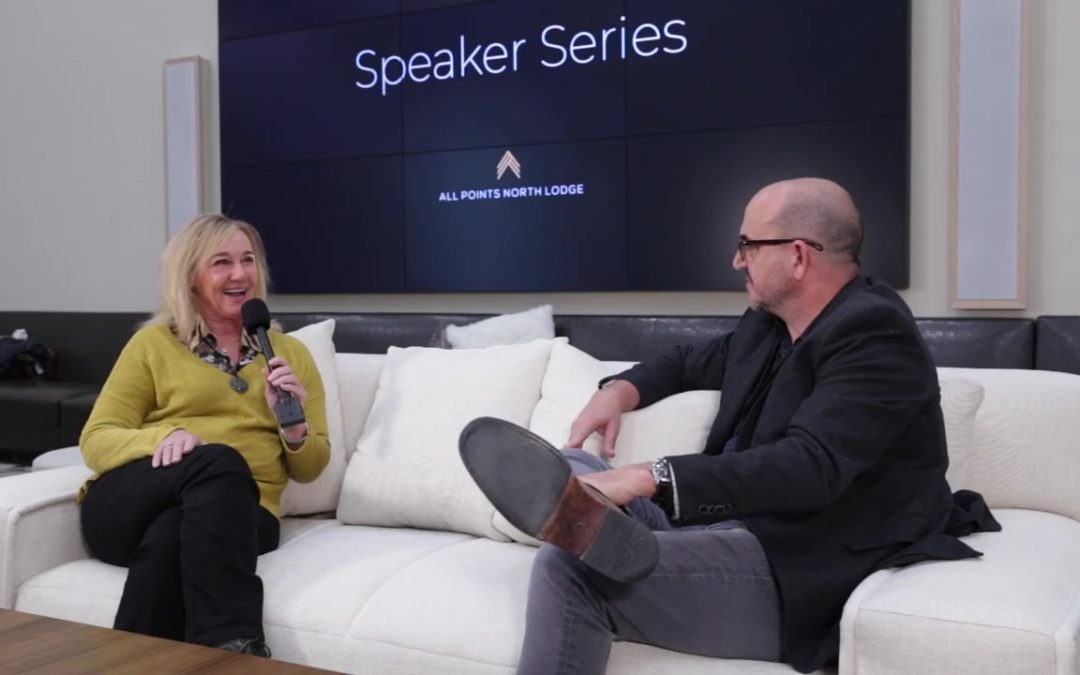
I had a great pleasure to be a guest at APN Lodge Speaker Series.
With my host, I discussed anxiety disorders in millennials searching for life purpose and direction.
Hypnotherapy, mindfulness-based stress reduction, EMDR, healthy mind/body/spirit/emotions, and breathwork all of which are modalities frequently useful to manage stress, emotions, and anxiety in that I use in my practice.
You can check out a full transcript of this interview below:
Dr. Connie: Hi my name is dr. Constance Clancy and I’m a psychotherapist in Aspen Colorado. I came here about five years ago, started fresh from Sanibel Island, Florida where I’ve been practicing for 30 years.
I practice adult psychotherapy for the most part although I do see some adolescents and my specialty is stress management and overcoming trauma and I’ve just completed a book and it is called “In the nick of time: Rising to resilience from the depths of betrayal” and it’s about overcoming narcissistic abuse.
It’s my own story and from a clinician’s perspective as well. I have a book on stress management and the gift of change the main thing I use is a movement to sensitization and reprocessing EMDR. I’ve been using that since 1996 and I find it to be incredibly effective. Anybody who’s come back from war or if they’ve been in a motor vehicle accident or they’ve had sexual abuse or whatever traumas they’ve come in to see me for we’ve done EMDR.
Sometimes it takes one session and sometimes it takes four or five but we always see results.
The host: The I’ve trained in EMDR too and of several of our clinicians here are trained in that and really also how we look at the especially in our trauma program how we look at it is really you know we’re not using EMDR with everybody but how we conceptualize a case and all of that is very similar to how it’s conceptualized before you get into the the actual tool so what what populate as you said the population you’re working on what’s kind of specific things around stress are you coming across most these days.
Dr. Connie: A lot of anxiety disorders. I see a lot of 20-something 30 something-year-olds and they’re seekers. They’re really trying to find what their life purpose is and living in a resort area so often these people are not really sure what their purpose is so they might be working in bars they might be getting into substance abuse they’re in relationships that aren’t working for them so they’re coming in with a lot of anxiety trying to decide what do I need to be doing with my life.
So we start with a family of origin finding out where they came from how long they’ve felt this way and basically what they want to be able to find for a good healthy balance in their lives.
I use a mandala and work with them on a healthy mind, body, spirit, and emotions and I take a very holistic approach and helping them reduce their anxiety. I also use hypnotherapy and they seem to really like that. I help them with mindfulness and understanding that living in the present and not focusing so much on the past or the future that brings on their anxiety can really help them reduce their anxiety and be better overall in terms of wholeness and balance in their lives, stress management.
The host: What are some of your favorite tools that you like to have them use when they leave your office?
Dr. Connie: I have them start out with daily gratitude every morning and just being grateful for what they do have. Taking a few deep relaxing breaths before they even get out of bed and just set the tone for the day. Maybe even read some little inspirational work so that they know that they can start the day feeling less anxious because the brain doesn’t seem to turn off for them.
A lot of the work that we do here especially in our intensive program is around the breath. One of my teachers said a long time ago: “If you want to change your mind, change your breath.”
If you’re in a survival state which is what stress is, it’s going into survival mode. When you don’t need to be in survival mode chances are we’re not breathing these full deep breaths and our mind has been tricked into saying “you’re in in danger” so you breathe like that and I think when we were able to take those long deep breaths and activate the parasympathetic nervous system we trick our brain into seeing the reality that we’re safe.
We might not like the situation we’re in, but we’re safe and we can handle the emotions. What we really do is try to teach people how to deal the to deal with the difficulties of life and not make choices that are gonna hurt them.
The host: Tell me about what are your favorite mindfulness practices?
I trained in mindfulness based stress reduction under Jon Kabat-Zinn from the year 2000 and that was very life-changing for me because I tended to have a lot of anxiety myself and once I went to the program and took the course I started really practicing it in my own life.
Once I became used to it as a daily practice, I thought, “why not help my clients with this?” Now 20 years later, mindfulness even though it’s a buzzword it really does work and Jon really stressed the evidence-based research behind it. The program started out of the University of Massachusetts Medical Center and I think corporations, businesses, and schools, and even elementary schools they’ve started mindfulness programs.
That’s so wonderful to see that people who are adhering to it are noticing that their lives are so much better and calmer. The practice I use with my clients is the MBSR program.
I use the hypnotherapy because it’s really relaxed focus concentration and I love using that because I record it for the clients and they have their sessions to take with them.
I say to them: “Play this when you get up in the morning or before you go to bed just not while driving.” They find that it does have a cumulative impact on the subconscious mind. They have really benefited from that as well in reducing their anxiety, sleeping better, having a better optimal health, and wellness overall.
The host: You mentioned having a practice yourself. How did that impact you as a clinician? How you work with others in taking that practice on yourself? If you don’t mind me asking, because it helped me so much in terms of reducing my own anxiety. I thought: “Hey we teach what we need to learn right”?
Dr. Connie: Every morning I do my meditation practice. The one thing I want to emphasize is that it does not have to be an half hour or an hour. It can be a few moments of just calming the mind, calming the body, and not being out in the future because that’s what brings on the anxiety.
That was a real catalyst for me. I wanted to go into my sessions certainly asking for guidance before each session, so I can be the best I can be in working with clients. If they can sense my energy as being calm and whole, then that might be a good projection on to them that situation not that bad. We really can find solutions to all of our worries.
So I want it to be instrumental in their lives by being a good example, a role model.
The host: It adds to the safety for sure and I love what you said about meditation. It doesn’t have to be 30 minutes. In mindfulness practices, one of the things that I teach in our workshops is: go outside and take breathing breaks like people took smoke breaks. A minute at a time, two minutes at a time so there’s a cumulative effect. It can help reorient you and just bring you back to the center.
Is there one last thing or things that you’d like to tell us about yourself or your experience here or what you’re doing.
Dr. Connie: moving from Southwest Florida was a huge energy shift for me, but I’m a hiker and I love the seasons so it really suits me. I’m living in the Aspen area and going on those hikes. I have two yellow Labradors and we go hiking as much as I possibly can and they absolutely love it. It gives them a lot of longevity, too.
I have really found that this area is conducive to my health and well-being and I think I’ve even become more holistic just through my own living experience here.
As I mentioned earlier, I just completed a book and it should be out this spring: “In the nick of time: Rising to resilience from the depths of betrayal.”
It’s all about people who have been betrayed. It goes back to early on in life and we repeat those experiences in our adult lives. I hope it will help people to learn to become resilient knowing that you can heal after betrayal.
The host: Well thank you very much and we’re gonna need some copies of your book here for our clients. Thank you very much and thank you for joining us today.